Inside Barnaby Thompson’s Creation Of ‘Maverick: The Epic Adventures of David Lean’
When Barnaby Thompson set out to tell the story of David Lean, he wasn’t expecting it to take on a narrative much like one of Lean’s own epics. Lean, one of the most celebrated filmmakers of all time, lived his life in opposition: in opposition to his parents, the British school system, his pursuit of a happy personal life, and what studios thought could be done with the relatively new medium of cinema.
Yet over time, David Lean became the director who inspired all directors. That is Thompson’s thesis in “Maverick: The Epic Adventures of David Lean.” The documentary, which charts Lean’s roots from childhood in Croydon to cinematic titan, had its glitzy premiere at the Cannes Film Festival, with its narrator, Cate Blanchett, in tow. The two first worked together on “An Ideal Husband,” which debuted at the festival in 1999.
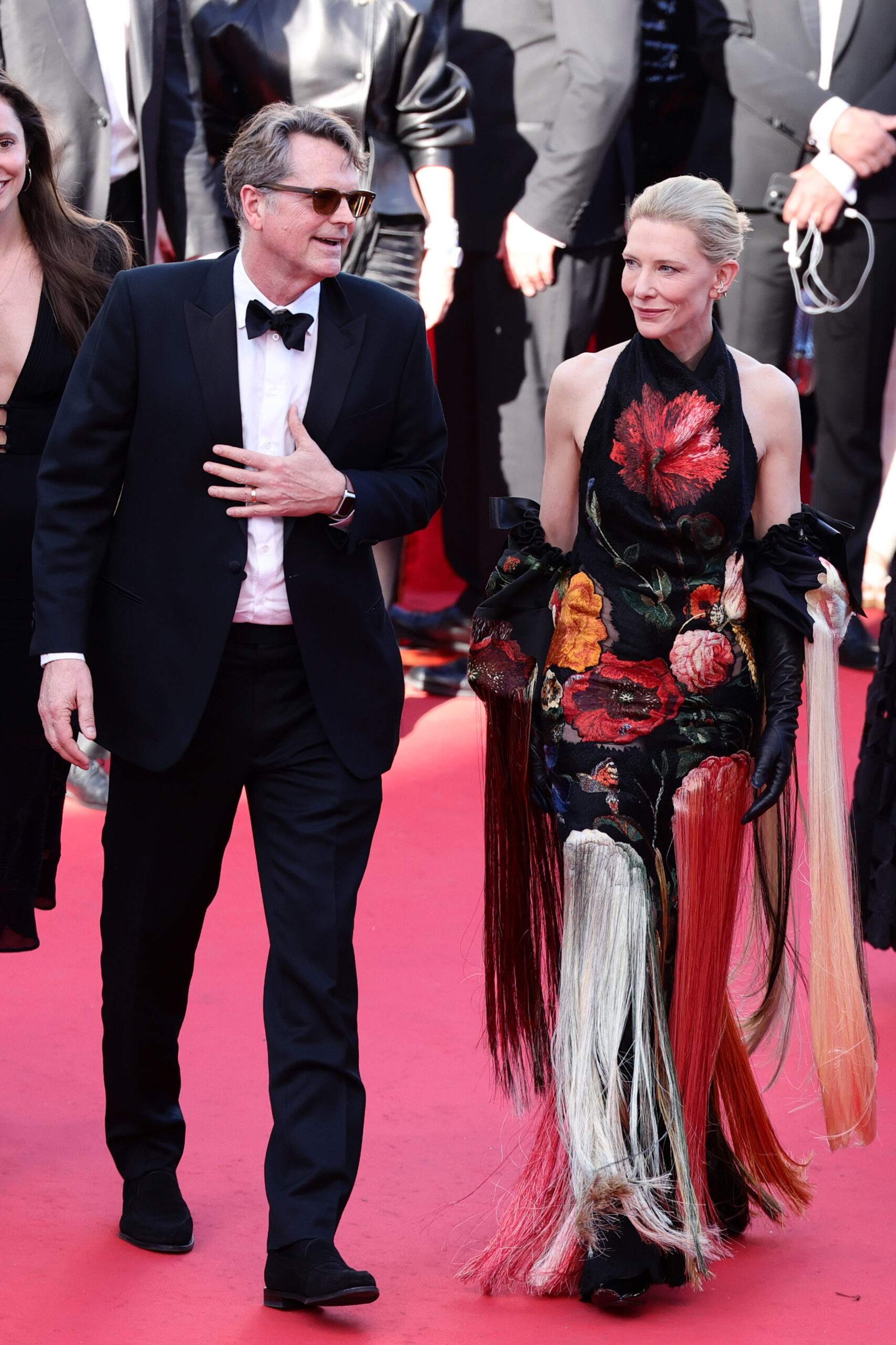
For “Maverick,” Blanchett signed on via text within minutes of Thompson asking, the kind of ease that comes from knowing, and trusting, another creative for the better part of 30 years. UK-born Thompson’s own history with the festival started when he was just a teenager. He would post notes on executives’ doors around the French Riviera and wait by the phone at his hotel for his big break in the industry. No calls came then, but his ambition was nevertheless spurred.
Through the years, he’s enjoyed a series of memorable trips to the festival, including the ’90s premiere with Blanchett and another in 1997, when he arrived with “Spice World,” which he produced, and where all five Spice Girls partied on the rooftop of a nearby hotel. Nearly 30 years later, Thompson sat on the deck of one of the many gorgeous, nondescript French apartments where Embankment Films, “Maverick’s” independent distribution company, had taken up residence for the duration of the festival. Shielding himself from the fierce sun beneath a baby blue baseball cap reading “David Lean,” Thompson sat down with Access Hollywood to talk about the legendary director, the theatrical revolution, and a night out with Lorne Michaels.
Access Hollywood: 80 years ago, Lean’s film “Brief Encounter” was honored here. How does it feel to bring this documentary to honor him eight decades later?
Thompson: Well, Cannes I think is the home of cinema, and David Lean to me is really the master of cinema. So the idea of bringing him back here, you know, to premiere this after 80 years just seems just right.
Access Hollywood: What was it that interested you in David Lean? I think for a lot of us when we pull up your IMDB we’ll see that you found your footing in comedy early on, and David Lean had some comedic elements, but that’s not necessarily what he’s known for.
Thompson: Through a circuitous set of events, I met Lorne Michaels, and Lorne invited me to Los Angeles, and he rang me up. He said, “We’re going to a party,” and so he picked me up, and then he said, “We’ve got to pick someone else up.” And we picked up Penny Marshall, who then, at the time, was like the biggest female director. And we went to Dawn Steele’s house, who was running Columbia, for a party celebrating David Lean, and everyone at the party was famous, you know. I was like a documentary filmmaker from London, and at a certain point I was sitting on a sofa between David Lean and Steven Spielberg. That was my introduction to Hollywood. I remember going to see “Lawrence of Arabia” when I was 17 or 18, and he just, you know, you just remember that’s something you never forget. So he’s, he’s always been a part of my journey. I made this film up Noël Coward, and Noël Coward really launched David Lean, you know, he was an editor and Noël gave him his break, and so, so that was really the first time I started looking into him as a person, and it’s normally, I think, something unusual that you find out makes, oh, that’s interesting. So, you know, David Lean, you assume, was this suave, sophisticated, well-educated, you know, just English guy, and you know he grew up in Croydon, which is a dreary suburb of London. He had dyslexia, he was terrible at school. He, you know, his father thought he was an idiot, a waste of space. And you start, and this is the man that made some of the most romantic films of all time, but never found lasting happiness himself.
Access Hollywood: He’s like Henry the Eighth with his six wives!
Thompson: All that starts building a picture of, oh, and then when I started making the film, you realize actually how much of his life is reflected in the movies he chose to make.
Access Hollywood: Yeah, I’m curious about digging into that, because you’re right, there’s when you think of David Lean, you think of ambition, you think of obsession with the craft, you think of a perfectionist. Where did that drive come from?
Thompson: Well, I think that he had an inferiority complex that he was fighting against all his life, and so I think he felt a terrific need to prove himself. I think in photography he discovered he had a skill, and he saw that skill translate to film, but the bit that’s impossible really to understand or know is why people, what gives certain people that just that drive and that ambition to go out and so for him he was making these films like “Bridge on the River Kwai” or “Lawrence of Arabia,” they’ve never been made before, the scale of things, so just the sheer perseverance and kind of hard headedness to go out into the desert and make that happen, is either that’s the kind of, that’s the ingredient x that certain people have, that, you know, it’s difficult to find out where that came from.
Access Hollywood: Would you say that his films were more of his first love rather than the people in his life?
Thompson: Without question. You know, I think he was, and I think it’s true of lots of filmmakers, is that they live life through their films, and I think for the people around them that’s hard, and I think that for him, I think he never felt more alive than when he was on set, and I think that he, the Katherine Hepburn film (“Summertime”), says, you know, he was always pursuing perfection, and I think that that was something that he felt he could achieve on screen in a way that he could never achieve in real life.
Access Hollywood: What was his fascination with Katherine Hepburn? Of all the epics and beautiful films he’s made, he’s often talked about “Summertime” being one of, if not his most, favorite.
Thompson: Well, I think a couple of things happened. I think one, it was his first film that was really on location, and I think that it was that set him free in a way that, you know, he’d been on shooting on stages up till then. And I think in Katherine Hepburn he found someone I think that they had a relationship where they knew straight away that they weren’t going to have an affair, you know, in that way, so that they could just be friends without sex being any part of it, and I think that for him she was obviously a fantastic actress, and also, I think, you know, she was a movie star, and I think, from the, so, the, you know, the quiet boy from Croydon, suddenly being in Venice with, you know, one of the biggest movie stars, and also she was clearly like a really smart person, impressive person, who also probably was happy to engage in his pursuit for perfection. He didn’t have great relationship with actors. I think he, I don’t think he ever fully respected their craft.
Access Hollywood: That wouldn’t be the first time I’d hear a director say something like that. I want to touch on something you know that you brought up with “Summertime” being the first time that he shot on location. David Lean did spectacle very well, and he did epics very well. Now, in 2026 we still have the spectacles, but we’ve sort of fallen out of fashion with the epics. Why do you think that is?
Thompson: I think it’s a loss of confidence in the business. I think that there was a period at the beginning of this century where the business went global, and so I think that everyone wanted to open a film in China on the same day that opening a film in America, and I think that that requires a certain flattening out of, that I think that the studios were scared of. What Lean did brilliantly was he would make these complex personal stories against this broad canvas, and I think the studio just lost their confidence [in that]. It’s what Chris Nolan does, and people go see those films, so I think it’s, I think it’s less to do with the audience, and I think it’s more to do with the decisions that the studios make.
Access Hollywood: I mean, all of the incredible filmmakers that you have featured in this documentary, too – they have the exact same mentality. They are creating the films that they want to create, and they’re taking risks, whether or not it’s going to get financed, or whether or not people are going to come see the movie, but they believe in their craft. It’s interesting, you talk about at the end of the century, everything going global, because James Cameron has often talked about how “Titanic” has been heavily inspired by David Lean, the idea of this intimate love story set up against –
Thompson: could easily be in a David Lean film…I think that it’s, you know, like “Oppenheimer,” “Titanic,” these are films that are personal movies against the broad canvas, and I think that they are absolutely films that were inspired by directors who loved David Lean’s work. And I think that the difference is that David Lean did all for real. You know? When he had 2000 camels out in the desert, he had 2000 camels out in the desert, and I think that what I mean, Cameron obviously is genius in terms of visual effects, and but to me there’s something about actually doing it, that is just extraordinary, and it probably can never be done again, because we now have, you know, the visual tools to do it.
Access Hollywood: Do you think that David Lean, if he were making movies now in 2026 if he would, if he would utilize all the new tools?
Thompson: Oh, yeah, I’m sure. Yeah, I’m sure. I’m sure he would. I’m sure he would be. I’m sure he would be like Cameron or like Nolan, and would know everything about the latest camera and the latest visual.
Access Hollywood: I think about Denis Villeneuve who is featured in the documentary, and his “Dune” films, one of the most recent epics, anyone seen in a long time, and the fact that he’s created a trilogy in an era where, again, as we said, we do spectacle, but we don’t see epics very much. What was his entry point to David Lean?
Thompson: Well, he tells the story in the film. He went to a theater when he was 17 or 18, and he saw “Lawrence of Arabia” in 70 millimeter, and it changed his life.
Access Hollywood: I’m interested in the international appeal with David Lean’s work, because you know, in the 60s, 50s, global box office numbers weren’t reported on. And often you couldn’t get these films if you’re living in France, Canada, or even in Mexico where Alfonso Cuarón [also featured in the documentary] grew up. How did people find his work?
Thompson: Well, you know, when I was growing, I’m about same age as Alfonso and Denis, you know, where there would be repertory houses that would play films, and I think that’s where they saw them. You would, it was kind of pre-VHS, so these might see something on TV, but they weren’t available in the way that everything is available now, and so it became very special to see, “oh, they’re playing “Brief Encounter” at the Paris Pullman on Friday!” And so it was a kind of much more of a spiritual journey, I think. And you know when you hear Alfonso talk about seeing “Brief Encounter” at some cine club in Mexico City, I mean, it’s sort of impossible to imagine it connecting with this 14 year old Mexican kid, and yet, talking these threads is really, really inspiring, because people like Alfonso, you know, he was able to talk about films that he hadn’t seen for 20 or 30 years, but it was like he’d seen them yesterday. I mean, his recall of moments in films, and, or Paul Greengrass, it was really incredible to see just how much, how seriously these guys take their craft.
Access Hollywood: Why do you think that we are still watching his films now? We’re in an oversaturated entertainment market, as we all know, but people, especially the younger generation, are going back to theaters to watch “Lawrence of Arabia” and to watch all these films. Beyond that, people are streaming, and coming to watch his film for the first time on Criterion Collection or on Turner Classic Movies.
Thompson: Nia DaCosta saw during Covid, she saw “Lawrence of Arabia” on Criterion and watched it. I had never seen “Brief Encounter” on a big screen until about two months ago, when I saw it at the BFI, and it was just, it was so fantastic, because you look at a film on a, you know, on your own screen, and it’s a personal experience, but there is nothing like the communal experience. So, take “Brief Encounter.” I’d never thought of it as being funny, but you, you play in a cinema, and suddenly people are laughing at lots of it, and you’re like, “oh wow,” and it just, it changes the experience, quite apart from just the joy. I think that kids, I mean, certainly, you know, my kids are off, they’re getting off social media, and I think that there is an excitement about that. I think I really believe in cinemas, the theatrical experience, and I really believe that these kids are finding it and getting excited about it. I mean, I was talking to Daniel Battesk, who runs the Lincoln Film Center [in New York]. He says they have [Federico] Fellini series it’s full of kids, it’s full of people in their 20s and 30s. To me it’s very exciting. I think it’s Criterion, it’s Letterboxd. I think that now what’s happening is what happened very early in the music business because of Spotify. Suddenly it didn’t matter where or when a song was written…I’m constantly amazed at songs my kids or my kids’ friends are listening to, and I think that’s now going to happen in film.
Access Hollywood: I would hope so! Where do you see David Lean now inspiring this next generation of filmmakers who are in their 20s and 30s starting out?
Thompson: Well, I think [Lean’s] coming back into the conversation because I think we really had, we’re in this moment now, and I think the tide has just turned, but I think the, you know, Netflix saying, you know, boo to the theatrical experience, and there was a moment where you thought, “oh my god, they’re gonna, they’re gonna get away.” But they’re not, you know, because I think the demand, both from filmmakers and the audience is strong enough, and so now people suddenly going, “okay, what is cinema?” And you start talking about cinema, David Lean is in the conversation immediately, and I think that hopefully what will happen is that more and more people will start discovering these films.
This conversation has been edited and condensed.