Barbara Kopple’s Oscar-Winning ‘American Dream’ Returns To Theaters
In 1990, teens were wearing baggy jeans. Julia Roberts topped the box office, parents stayed up late to catch a new animated series, “The Simpsons,” and woke up to daily papers about the Gulf War. Over in Austin, Minn., a young documentarian was up at dawn, driving to a local union meeting.
Thirty-six years later that filmmaker, Barbara Kopple, is looking back at her Academy Award–winning film “American Dream” (1990) with disbelief.
“I feel as if I never left,” Kopple told Access Hollywood. “It brings back all kinds of memories of being with those people and really watching them stand up for what they believe in. And it was a great experience, even though the outcome was not as wonderful as it could have been, right?”
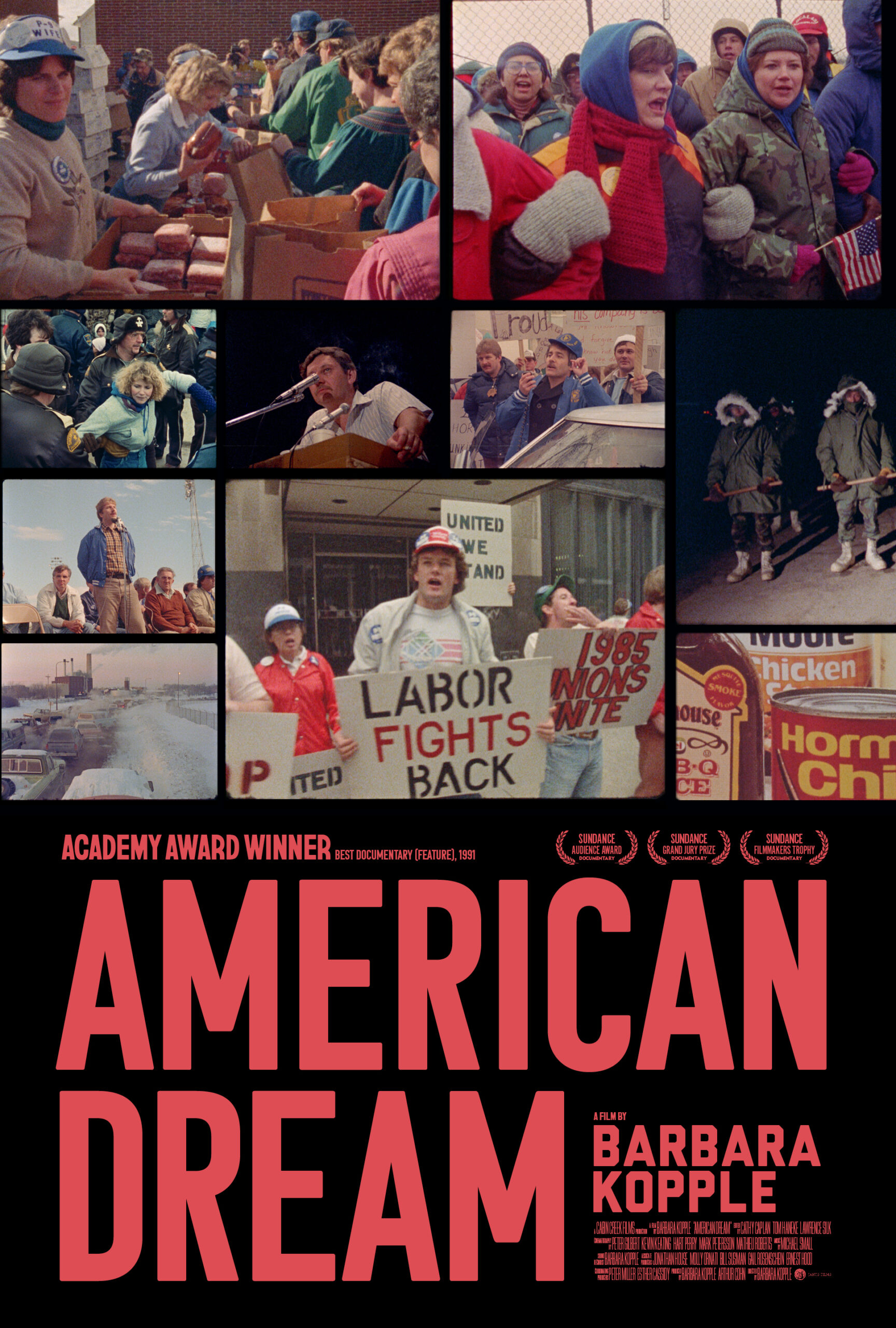
Supervised by Kopple herself, the newly minted 4K restoration of the 1990 film follows a local union in Austin, Minn., as members navigate the Hormel strikes of the late 1980s. It’s journalism in action, with Kopple and her army of cameras and sound recordists on the frontlines of a fight for the working class. Grainy textures, colorful jackets, and graphic hats fill the frame. A woman in a blue shirt reading “Cram the Spam” pops out among the Midwestern crowd. “American Dream” is a fitting title.
“It just hit me,” Kopple said, describing how she landed on the title. “This one woman said, ‘All I want to do is live in my $32,000 house. And with this going on, I can’t afford it.’ You know, to be people—to go on camping trips, to take their kids to the beach, to have barbecues, to do all the things that give you a great quality of life.”
As the story goes, Kopple was working on a documentary about the Armour meatpacking plant in a nearby town when the plant shuttered, leaving the community feeling desolate.
“It was sort of like, in the next few days after that, a ‘Grapes of Wrath’ kind of feeling, you know, putting everything in trucks and leaving town, not knowing where they were going,” she recalled.
Kopple turned on the radio and heard a fired-up crowd in Austin, Minn. She tracked the scent of the story like a hound dog, driving toward the action after learning about the Hormel strikes.
“I think the passion for making these films comes from loving people and wanting to see them happy and good things happening to them or watching them change,” she continued.
“American Dream” explores male identity in the workplace, and in one particularly moving scene, Kopple sits across from an elderly man as he comes to grips with that reality.
“You feel like his story and his feelings will never be silenced because you’re getting them on film. So it gives you confidence, and some power, to keep going,” she said. “Being able to capture all of those feelings is something that’s really important to me.”
Almost four decades later, it still resonates, and Kopple hasn’t eaten Hormel products since.
Later this year, Kopple will celebrate 50 years of her 1976 film “Harlan County, USA,” about labor strikes in the mining industry, which brought her international acclaim. The native New Yorker began her career in clinical psychology before shifting to filmmaking when she realized that while people might not read what she wrote, they would watch it. As for why audiences are still watching the film 50 years later, Kopple points to modern parallels.
“I think that it’s unfortunately timeless. It’s about people all over our country fighting for basic human rights, for a decent salary and a safe place to work. That’s what the people of Harlan County were doing. They were willing to give up everything to have a union, because unions protect vacations, help ensure safety in plants as much as possible, and fight for good wages,” she said.
This September, the 79-year-old will screen the film in Harlan County, Ky., where the mines have since closed and many of the families Kopple spoke with have moved away. But the embers of a once-passed revolution remain.
That, along with the memory of winning the Oscar for Best Documentary, the first time a woman won in the category.
“I heard the words ‘Harlan County,’ and two hands from behind me pushed me up. I could feel my heart beating somewhere in the room,” Kopple recalled. “Right after the Academy Awards, I called the coal miners and their wives, and they had been driving around in their cars, screaming at the top of their lungs: ‘We won an award! We won an award!’”
“American Dream” opens at the IFC Center in New York City and nationwide from May 1, and “Harlan County, USA” is available to stream on the Criterion Channel.